How to photograph fireworks is a question many hobbyists ask before a show. This guide gives clear steps that help readers get sharp, colorful images. It lists the gear to bring, the camera settings to use, and the timing that yields the best bursts. The tips suit compact cameras, mirrorless bodies, and DSLRs. The tone stays practical and direct.
Key Takeaways
- How to photograph fireworks effectively starts with preparing gear like a tripod, remote shutter, and the right lens, and choosing a clear location with a good view and minimal smoke.
- Set your camera to manual mode with ISO 100 or 200, aperture between f/5.6 and f/11, and shutter speeds from 1 to 8 seconds or use bulb mode for longer exposures.
- Use manual focus locked on a distant light to ensure sharp images and trigger the shutter just as the shell launches to capture the full burst.
- Compose your shots by including foreground elements for context, frame appropriately for burst shapes, and time exposures to capture peak fireworks bursts.
- Experiment with shutter timing and exposure bracketing early in the show to find the best settings, and review images to adjust quickly.
- Enhance your firework photos in post by adjusting contrast and color cautiously, stacking images for noise reduction, and keeping detailed metadata for future improvement.
Prepare Ahead: Gear, Location, And Shooting Conditions
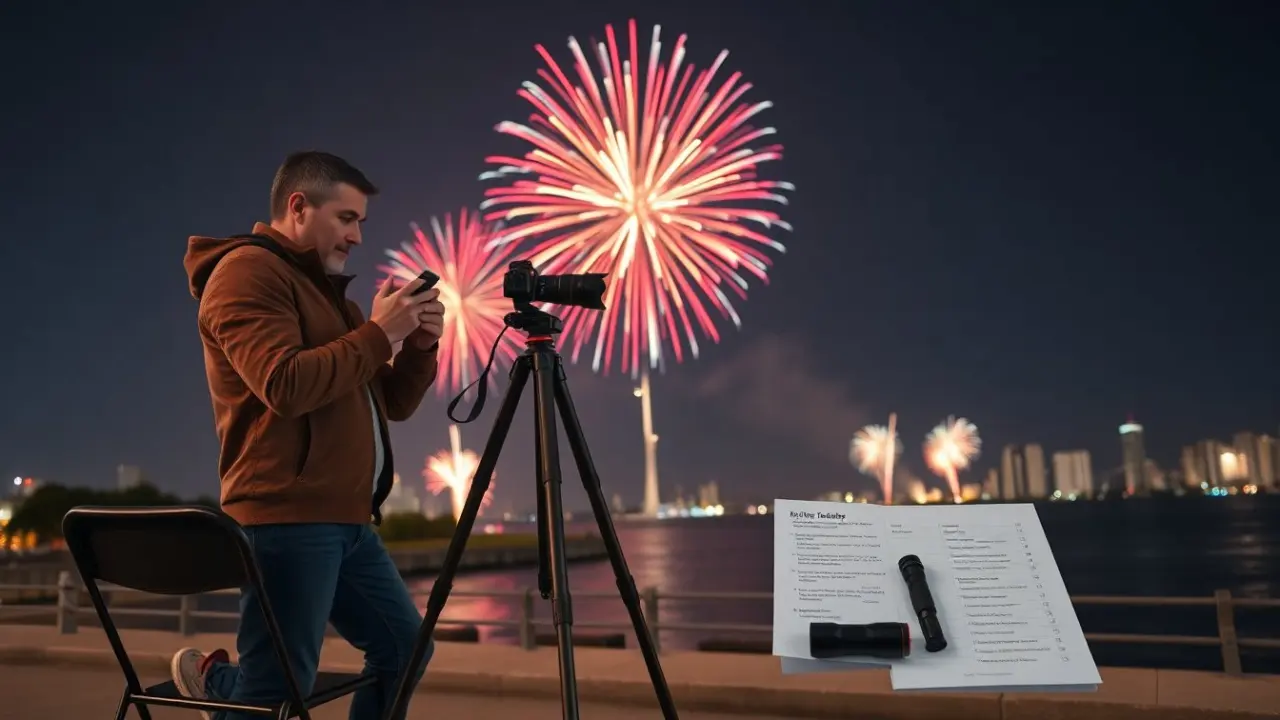
How to photograph fireworks starts with gear and location. The photographer packs a tripod, a cable release or remote, and a lens with a manual focus ring. The photographer brings extra batteries and a memory card. The photographer selects a mid-range zoom or a 24–70mm prime for general views. The photographer chooses a longer lens for close-up bursts.
The photographer picks a location that faces the launch site. The photographer checks wind direction and avoids smoke blowing toward the camera. The photographer arrives early to claim a spot and to set up the tripod. The photographer scouts foreground elements, such as water, buildings, or trees, that add context.
The photographer checks local rules and safety areas. The photographer confirms that the camera can use bulb mode and manual exposure. The photographer uses a lens hood to cut stray light. The photographer uses a small flashlight to adjust controls in the dark. The photographer wears a jacket if the night gets cold.
The photographer considers crowd control. The photographer brings a chair and a headlamp that the photographer can dim. The photographer practices framing during daylight. This practice reduces mistakes when the fireworks start. The photographer tests focus on a distant light. The photographer locks focus and switches to manual focus to keep the focus fixed.
Camera Settings And Practical Shooting Techniques
How to photograph fireworks requires correct camera settings. The photographer sets the camera to manual mode. The photographer sets ISO to 100 or 200. The photographer sets aperture between f/5.6 and f/11. The photographer sets shutter speed between 1 and 8 seconds for most bursts. The photographer uses bulb mode for long multi-burst exposures.
The photographer composes and then focuses manually. The photographer opens the lens and frames the expected burst area. The photographer uses a remote or cable release to avoid camera shake. The photographer triggers the shutter when the shell leaves the mortar. The photographer holds the shutter open through the burst and closes it after the main trail fades.
The photographer experiments with timings. The photographer shortens the shutter for quick bursts. The photographer lengthens the shutter to record multiple bursts and light trails. The photographer uses a low ISO to keep colors clean. The photographer sets white balance to daylight or auto depending on camera behavior.
The photographer uses exposure bracketing in the first 10 minutes. The photographer reviews images on the camera screen and adjusts settings quickly. The photographer keeps the lens cap handy to end an exposure in bulb mode if needed. The photographer avoids zooming during open shutter to prevent odd artifacts. The photographer uses front curtain sync when adding foreground flash for a single balanced frame.
Compose, Time, And Polish Your Firework Photos
How to photograph fireworks succeeds when composition, timing, and editing align. The photographer places the horizon low when the sky dominates. The photographer includes a foreground subject to give scale. The photographer frames vertically for tall shells and horizontally for wide volleys.
The photographer times shots to catch the peak. The photographer watches the shell and notes the delay between launch and burst. The photographer counts a one-two beat and then opens the shutter. The photographer closes the shutter once the main burst fades. The photographer varies timing to capture trails, blooms, or multiple overlapping shells.
The photographer uses multiple exposure techniques for creative results. The photographer shoots a dark frame between bursts to avoid overexposure. The photographer stacks images in post to keep highlights and reduce noise. The photographer blends a sharp foreground exposure with a long-exposure sky to keep both elements clear.
The photographer edits to enhance clarity and color. The photographer adjusts contrast and exposure first. The photographer raises highlights cautiously to avoid clipping. The photographer boosts saturation slightly to make colors pop. The photographer removes sensor spots and stray light with a spot tool. The photographer uses noise reduction only when needed to retain detail.
The photographer exports files at high quality for prints and web. The photographer includes location and camera settings in file metadata for future reference. The photographer reviews the session to note what worked and what did not. The photographer practices at other shows to refine timing and composition.
How to photograph fireworks becomes easier with practice. The photographer repeats these steps at several shows. The photographer learns to predict shell behavior and to adjust settings fast. The photographer builds a small kit and a checklist to avoid last-minute mistakes.