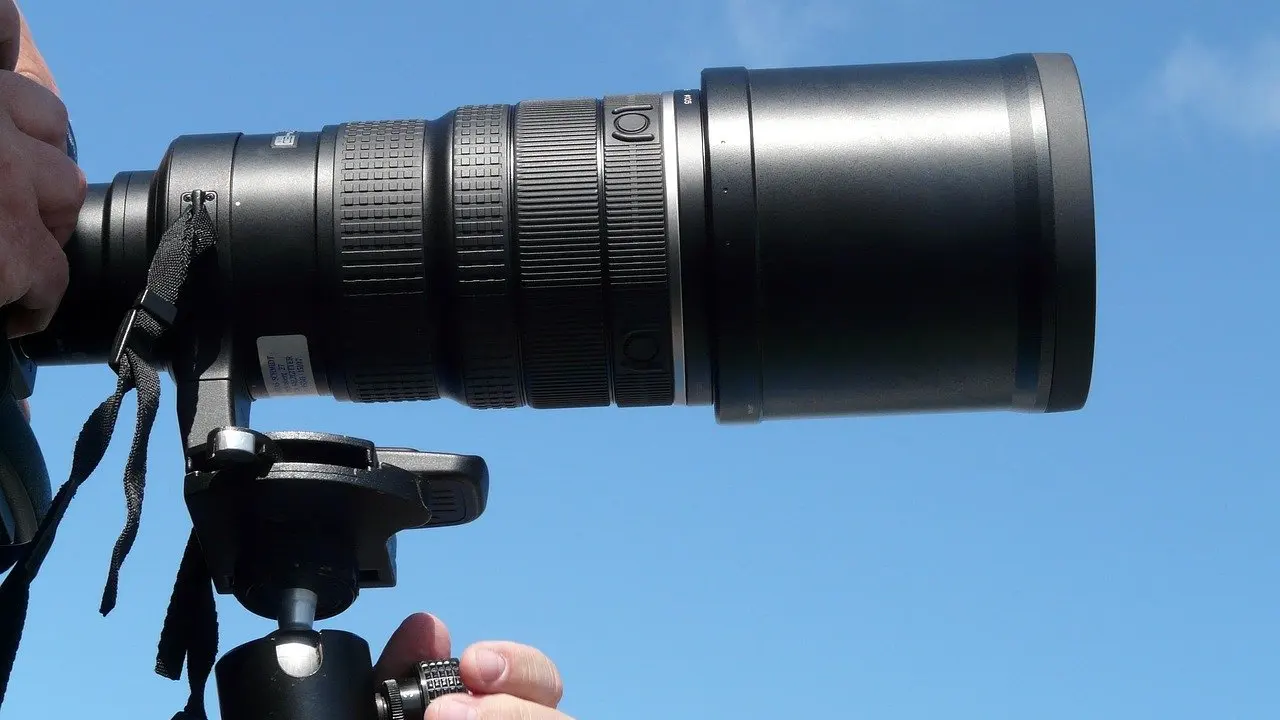
Picking up a bulky lens and a slim one, you might guess the bigger one has the bigger number. What is focal length, really? An optical distance in millimetres, not physical length, that sets angle of view and magnification.
Sensor size changes the framing you actually get, so the same number behaves differently across camera formats. For the wider skills around exposure and lenses, start with photography basics for beginners.
What focal length measures
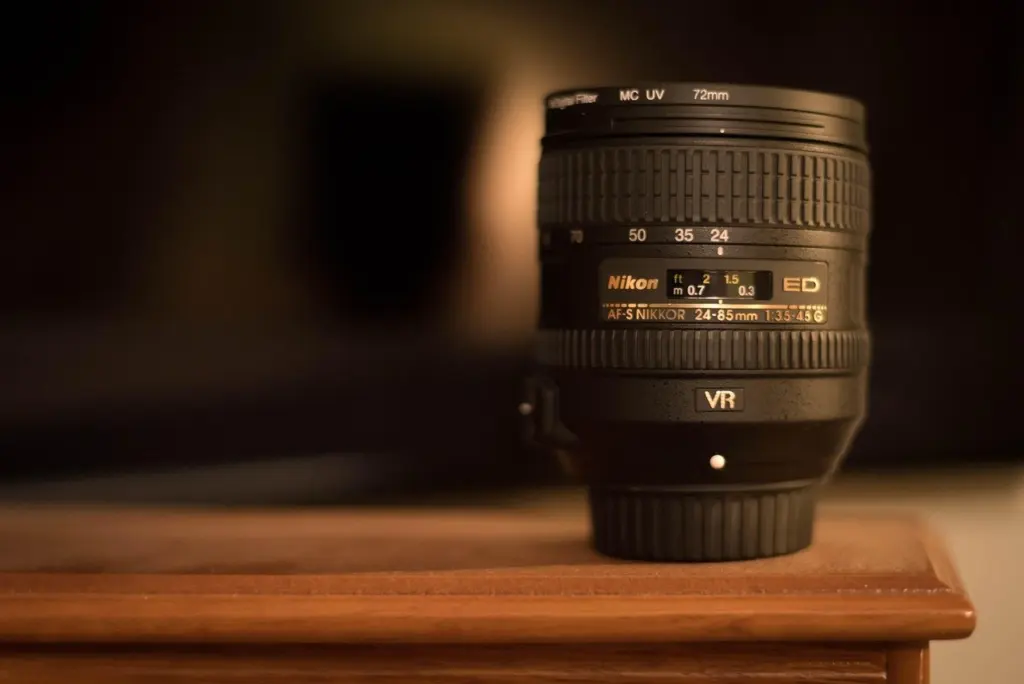
Nikon describes focal length as a calculation of an optical distance rather than the actual length of a lens, and it is determined with the lens focused at infinity. That is why a compact lens can carry a larger number than a chunky one: the number describes how the glass bends light, not how much barrel surrounds it.
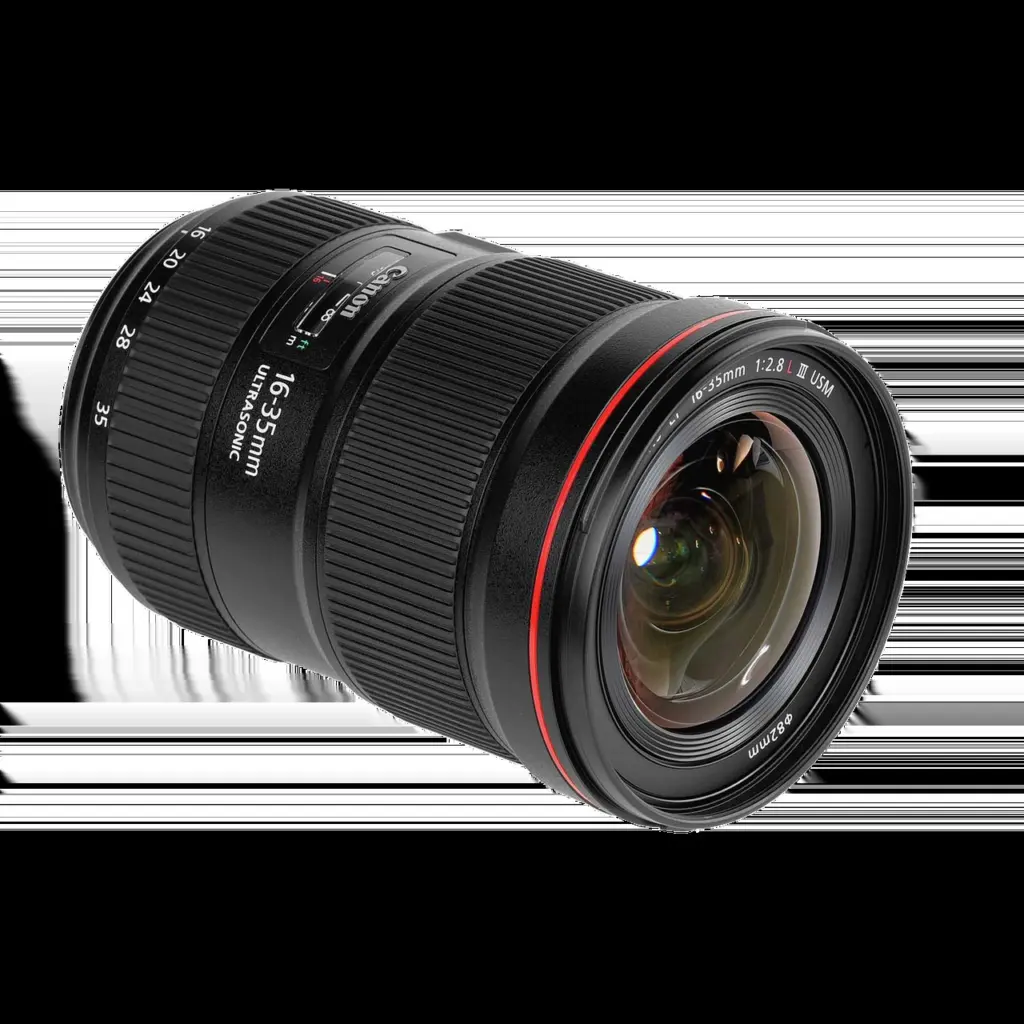
Most lenses shorten slightly in focal length as you focus closer, according to Nikonians’ field-of-view tables, so the printed figure is a reference value at infinity rather than a constant for every shot. Treat the markings on the barrel as the starting point for framing, not a guarantee at close range.
| Common assumption | What holds | Planning use |
|---|---|---|
| The number is the lens’s physical length | It is an optical distance, expressed in millimetres | Compare lenses by what they frame, not by how big they look |
| The number is fixed in every situation | It is determined with the lens focused at infinity | Expect slight differences when shooting very close |
| The number only affects zoom | Longer focal length means a narrower angle of view and higher magnification | Pick the number to match how much of the scene you want in frame |
Figures in this table come from Nikon’s explanation of focal length.
Angle of view and magnification
Focal length controls the angle of view and the magnification of a photograph, and the two move in opposite directions. Longer focal lengths see a narrower slice of the scene and enlarge it; shorter ones take in more and make each subject smaller.
- Wide view: a short focal length fits a room, a street or a mountain range into the frame, but the main subject shrinks unless you move closer.
- Tight view: a long focal length brings a distant subject forward and cuts away surroundings, which helps when you cannot walk closer.
- Sensor still matters: the diagonal angle of view is defined by focal length and sensor size together, as The Photo Video Guy puts it.
Nikonians’ tables give concrete angles. A 50mm lens on an FX (full-frame) body covers 39.6° horizontally, 27.0° vertically and 46.8° diagonally. A 55mm lens on a DX body covers 24.0° horizontally, 16.1° vertically and 28.7° diagonally. The numbers are on the same footing only once you account for the sensor, which is the next misunderstanding to clear up (field-of-view tables).
Sensor size and crop factor
A smaller sensor does not change the lens’s focal length; it changes how much of the image circle is recorded. Crop factor, explained by The Photo Video Guy as a mathematical factor describing a sensor relative to full frame, is the shortcut for converting between formats.
| Format | Crop factor | Sensor size | Planning use |
|---|---|---|---|
| FX / full frame | 1 | 36.0 mm x 24.0 mm | Read focal lengths at face value |
| DX / APS-C | 1.5 | About 23.5 mm x 15.6 mm (varies by manufacturer) | Expect a tighter view than the same number on full frame |
| CX | 2.8 | Not listed | The strongest multiplier of these formats; plan for very tight framing |
Crop factors come from Nikonians, and sensor dimensions from Tamron’s focal length guide.
Tamron’s conversion rule is to multiply an APS-C focal length by 1.5 for Sony and Nikon, or 1.6 for Canon, to find the full-frame equivalent. Its APS-C table pairs a 24mm wide view with 16mm, a 50mm standard view with 33mm, a 180mm telephoto view with 120mm and a 400mm ultra-telephoto view with 266mm on APS-C (Tamron global). The Photo Video Guy gives a practical example: an 18mm lens on a crop sensor frames much like a 28mm on full frame.
The decision this drives: if you move between formats, judge a lens by its equivalent view, and keep in mind that the multiplier changes framing but not the lens’s optics.
Lens classes and what each suits
Class boundaries differ between makers and formats. Tamron treats focal lengths under 35mm as generally wide-angle, around 50mm as standard and over 80mm as telephoto. Nikon gives separate approximate ranges for FX and DX, which show how the same job needs a shorter number on a crop body.
| Lens class | FX approx. | DX approx. | Planning use |
|---|---|---|---|
| Wide-angle | 14–35mm | 10–24mm | Landscapes, interiors and scenes where you want to include more |
| Standard | 50–60mm | 35mm | General-purpose shooting with natural framing |
| Telephoto | 70–200mm | 55–200mm | Portraits, product work and subjects you cannot approach |
| Super telephoto | 300–800mm | 200–600mm | Very distant subjects, where reach matters more than portability |
Ranges are Nikon’s approximate figures from its focal length guide.
Wide lenses also change how much of the scene is sharp. Tamron notes that the shorter the focal length and the larger the F-number, the deeper the depth of field (Tamron global). That makes wide-angle lenses forgiving for landscapes where foreground and distance should both stay sharp. Telephoto lenses at wide apertures work the other way, which suits isolating a subject from its surroundings.
For long lenses used on distant animals, the field technique matters as much as the glass; How To Photograph Wildlife: Practical Tips For Better Shots In 2026 covers that side.
Perspective and compression
The common belief that a telephoto lens changes perspective is only half right. Tamron states that focal length does not change perspective; perspective is determined by camera-to-subject distance. The compressed look comes because longer lenses are typically used from farther away, which squeezes foreground and background together (Tamron’s explainer).
- Move to change perspective: stepping forward or back alters the relationship between near and far objects, whatever lens is mounted.
- Zoom to change framing: twisting a zoom crops or widens the view without altering that relationship.
- Choose by effect: pick a long lens and a far position for stacked, compressed layers, or a wide lens and a close position for depth between objects.
Where a subject sits in the frame is the next layer of the decision, and Mastering Composition: Practical Photography Rules For Stronger Images shows how to use that framing deliberately.
Portraits and the focal length question
No single number is best for portraits, but the supported range is clear. Nikon says telephoto lenses between 70 and 200mm are very popular for portraiture and product photography, and that standard lenses are also a popular choice for portraiture. A telephoto lets you take the photo at a distance that does not intrude upon the subject (Nikon).
Tamron’s comparison on its 35-150mm zoom shows the effect: at the telephoto end, 150mm, the expression on the person’s face becomes compelling, while the 35mm wide end puts more emphasis on the surroundings (Tamron global). Match the lens to the picture you want: telephoto for the face, standard or wider for the person in their environment.
Sensor size shifts the choice. On the 85mm focal length, Nikonians lists a horizontal angle of 23.9° on FX against 15.7° on DX, so an 85mm lens frames noticeably tighter on a crop body (Nikonians). If you shoot DX, a shorter focal length can give the framing you expect from a longer one on full frame.
Choosing a lens by framing
Start from the picture, then work back to the number. Ask how much of the scene must fit, how far you can stand from the subject and whether the background should recede or stack up.
- Fix your camera format: know whether your sensor is full frame or APS-C, then apply the multiplier before comparing lenses.
- Decide the class: wide for environments, standard for general work, telephoto when distance or subject isolation is the goal.
- Check your position: if you cannot step back, a longer focal length gives the same subject size from farther away, but with the compression described above.
- Prefer a zoom while learning: a zoom spans a range from a wide end to a telephoto end, so you can see which framing you reach for before buying a fixed lens.
Frequently asked questions
| Question | Answer |
|---|---|
| Does focal length change when I focus closer? | Yes, usually. Focal length is stated for infinity, and most lenses decrease in focal length as you focus closer (Nikonians). |
| Which lens is closest to what the eye sees? | Standard lenses. Nikon says they are popular because their angle of view is closest to what humans see (Nikon). |
| What do the two numbers on a zoom lens mean? | They mark the wide end and the telephoto end of the range. Tamron’s 35-150mm zoom, for example, runs from a 35mm wide end to a 150mm telephoto end (Tamron global). |