A child sprints across the garden and the frame comes out blurred. The fix in how to photograph kids is a fast shutter speed, continuous autofocus and burst mode, plus a lens that lets you stand back and shoot at eye level.
Most disappointing photos of children trace back to a few habits that sound sensible but work against small, unpredictable subjects. The sections below take each habit in turn, and photography basics for beginners covers the exposure fundamentals behind them.
Shutter speed and exposure settings
The first assumption to drop is that a shutter speed that suits adults will suit children. The New York Institute of Photography’s guide to action shots of kids points out that children move quickly and unpredictably, and suggests starting at 1/1000 sec for moving subjects. To set that number directly, switch the camera to Shutter Priority (S or Tv on the dial) and adjust the value.
A photographer-led guide to photographing children works in Manual mode and sets the shutter speed to 1/180 or 1/250 sec. The two figures are compatible. Treat 1/1000 sec as the figure for running and jumping, and the slower pair as a baseline you raise as the action speeds up.
Aperture and ISO then follow from what you want the background to do. The table below sets the common beliefs against what the guidance supports.
| Common belief | What works for kids | Planning use |
|---|---|---|
| Any shutter speed will freeze a child | Start at 1/1000 sec for moving children; 1/180 or 1/250 sec is a manual-mode starting point | Raise the speed as the child moves faster; use S or Tv to set it without touching other values |
| Wide open is always best | f/5.6 or f/8 keeps the background sharper; f/2.8 or f/2 on a prime blurs it | Choose the aperture by whether the setting adds to the picture or distracts from it |
| ISO should stay as low as possible | Start around ISO 800 in changing light and increase only if needed; high ISO adds noise | Raise ISO in steps when the shutter speed cannot stay fast enough |
The figures come from the New York Institute of Photography and the Creative Photographer guide.
Settings only help if the camera is also tracking the child, which is the next place sessions go wrong.
Focus and burst for moving children
A second misconception is that focusing once and pressing the shutter is enough. A running child leaves the focus point within a moment. The NYIP guide tells shooters to look in the camera’s AF settings for AF-C or AI Servo AF, the continuous modes that keep refocusing while the shutter is held half pressed.
Pair that with burst mode, also called Continuous Shooting, which takes several photos in a row while you hold the shutter button. A photographer’s family-photography advice on taking better photos of your children recommends firing a burst of frames with continuous focus tracking on, and notes that most midlevel cameras can do this. Bursts matter for expressions as much as action, because the best face often sits in one frame among several near-identical ones.
Continuous tracking is not the only route. When you know where the action will happen, such as the bottom of a slide, press the shutter halfway to lock focus there and wait. This suits predictable paths; for a child changing direction constantly, stay with continuous autofocus and a burst.
Choosing a lens
It is easy to believe the zoom that came with the camera will do everything. For a soft, separated background it will not. The family-photography advice linked above says the kit zoom “won’t cut it” for that look, and points to a lens with an aperture lower than f/2.0, ideally at a telephoto focal length, for stronger background blur.
Distance is the second reason to prefer a telephoto. A photographer writing for Fstoppers typically starts a session with a 70-200mm f/2.8 and keeps a little space between photographer and child, so a hesitant child can warm up without a lens in their face. This suits shy or timid children best. With a confident, playful child, a prime on a wide aperture is a lighter alternative.
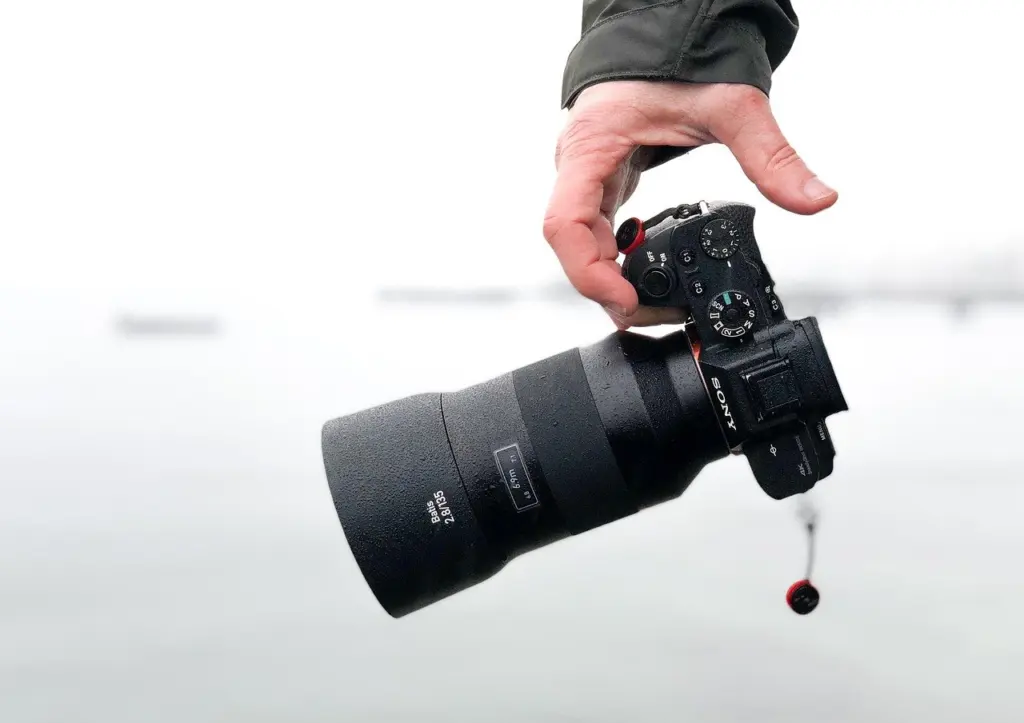
The other common mistake is carrying everything. The Creative Photographer guide finds a better result comes from taking only one or two lenses, because fewer choices means less time deciding while the moment passes. If you want to understand how f-numbers translate to depth of field before picking one, read Aperture In Photography: How To Master Depth, Exposure, And Creative Control In 2026.
Natural light
Many people assume flash or studio lighting is needed for good portraits of children. Creative Photographer notes that artificial lighting has its place but takes a lot of expertise to set up and use, which is why natural light is the practical default for most families.
- Time of day: light is softest towards the end of the day, about 2 hours before sunset, according to the family-photography advice cited earlier.
- Daytime outdoors: find shade under trees, but watch for hotspots where sun leaks through the leaves, since they cause uneven exposure on faces and clothes.
- Judgement call: if a session cannot move to softer light, shade is the safer choice over harsh direct sun, because it gives you one consistent exposure to work with.
Getting natural expressions
The belief that good expressions come from asking for them is the most stubborn. Candid results come from a child who is comfortable and busy, with a photographer ready to catch the moment.
Shoot from the child’s eye level
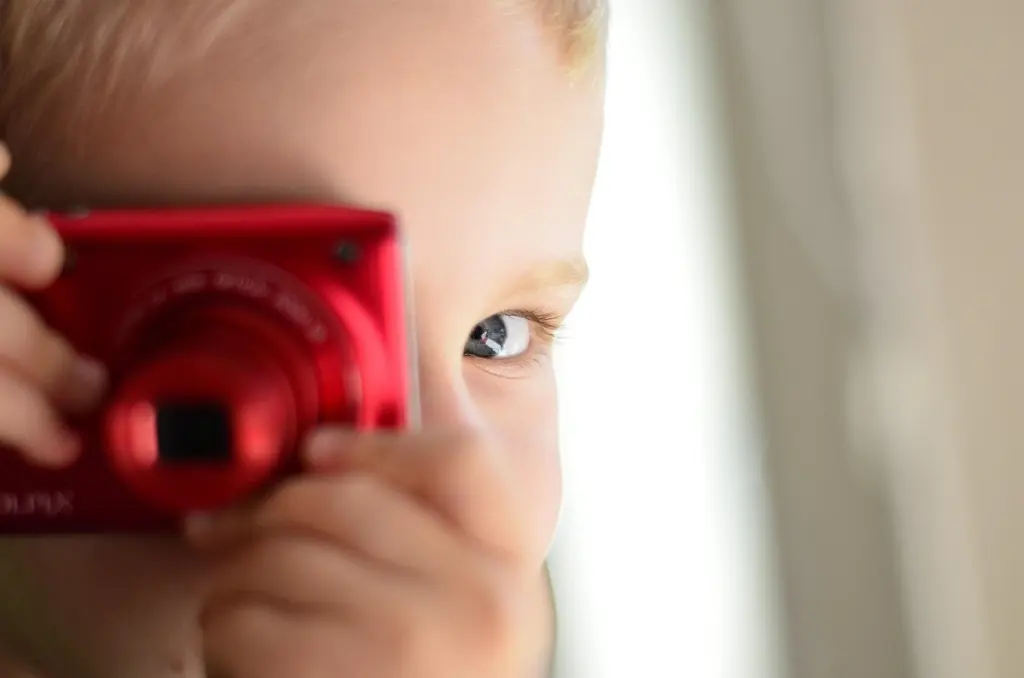
Looking down at a child produces a view adults see every day. The family-photography advice is to get down and shoot with the camera at the child’s eye level. A longer lens helps here too, because you can crouch at a distance and still fill the frame.
Do not force the smile
The same photographer says a smile should not be forced, and recommends capturing genuine moments alongside the posed photos. The NYIP guide adds what to look for: concentration, joy and determination can capture the essence of a moment as well as a grin does. A burst with continuous focus keeps you ready for those changes.
Let the child see the pictures
Fstoppers advises showing children the pictures you take. Seeing them can give a child a sense of accomplishment after each pose, and that tends to make the rest of the shoot easier.
- Misreading stillness: a quiet, serious child is not a failed shot; concentration is one of the expressions worth keeping.
- Over-directing: constant instructions replace the real expression with a performed one, so give the child something to do and shoot while they do it.
- Chasing posed frames only: keep a posed set for the family wall and a candid set for everything else.
Bringing it into a session
Settings and angles work best when the child has something engaging to do. 30 Creative Family Photoshoot Ideas To Capture Real Moments (2026 Guide) offers activities that supply the movement and expressions these setups are built to catch.
Frequently asked questions
| Question | Answer |
|---|---|
| Is raw worth using for children’s photos? | Yes. The Creative Photographer guide recommends raw because it gives the best quality and lets you decide white balance later. |
| Can auto ISO handle changing light? | Yes. The same guide pairs Manual exposure with Auto ISO, and notes that older cameras may need Aperture Priority with a high enough ISO instead. |
| How do I show motion on purpose? | Pan with the child. NYIP suggests a slower shutter speed, around 1/30 of a second, while you focus on the child and move the camera to follow. |
| What helps if a child gets upset or shy? | Ask parents to let the child bring a favourite toy, and take a break if the child is upset, as Fstoppers advises. |