In photography, aperture describes the adjustable opening inside a lens that controls how much light reaches the camera sensor and helps determine how much of the scene appears sharp. Photographers use aperture to balance exposure and depth of field, choosing wide openings for blurred backgrounds or small openings for sharp landscapes. Understanding aperture makes creative control predictable rather than accidental.
Key Takeaways
- Aperture in photography controls the amount of light entering the lens and influences the sharpness range through depth of field.
- Lower f-numbers indicate wider apertures that allow more light and create a shallow depth of field for blurred backgrounds, ideal for portraits.
- Higher f-numbers mean smaller apertures that reduce light but increase depth of field, keeping landscapes and group shots sharp.
- Balancing aperture with shutter speed and ISO in the exposure triangle is crucial to achieving the desired photo effect and proper exposure.
- Photographers should test lenses to find the sharpest aperture, usually around f/5.6–f/8, and avoid very small apertures that may cause diffraction.
- Practical aperture choices depend on the scene and creative intent, such as using wide apertures in low light and stopped down apertures for maximum sharpness.
What Aperture Is And How It Works
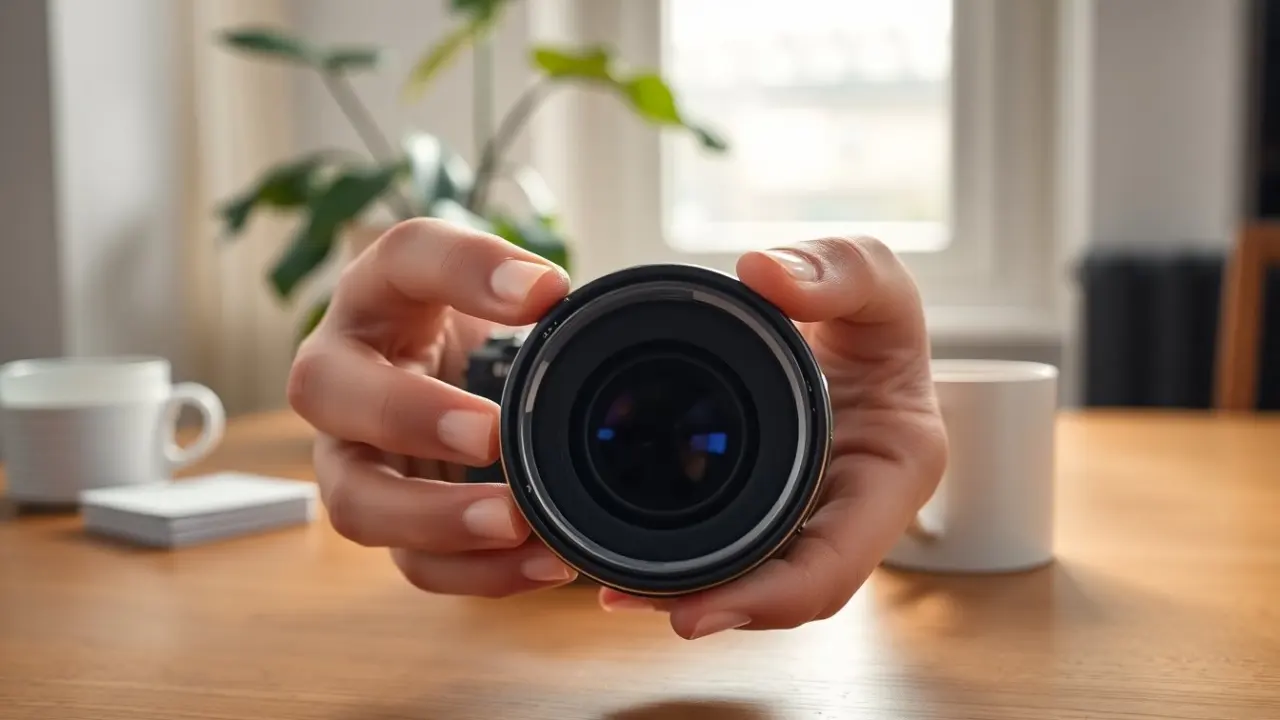
Aperture is an adjustable diaphragm inside a camera lens made of overlapping blades: it functions much like the pupil of an eye. When the blades open wider the aperture number decreases (for example, f/1.8), and when the blades close the aperture number increases (for example, f/16). F-number is the ratio of the lens focal length to the diameter of the opening, so the same labeled aperture across different lenses produces comparable light effects even if absolute sizes differ.
Light control is the aperture’s first job: wider apertures let in more light per second, allowing faster shutter speeds or lower ISO, while smaller apertures reduce incoming light and often require slower shutter speeds or higher ISO. A secondary, equally important role is shaping the depth of field, the zone of acceptable sharpness in front of and behind the subject. Mechanically, the blades change the lens’ effective entrance pupil and the pattern of out-of-focus highlights (bokeh), so the aperture affects both technical exposure and the photograph’s aesthetic.
Because aperture interacts with shutter speed and ISO, photographers use it as part of the exposure triangle to create an intended look while keeping proper exposure.
How Aperture Affects Exposure And Depth Of Field
Aperture controls exposure in predictable steps called stops: each full stop halves or doubles the light. For example, moving from f/4 to f/2.8 doubles the light, letting the photographer use a faster shutter speed or lower ISO to maintain the same exposure. That makes aperture a practical tool for shooting in mixed lighting: opening up avoids motion blur in dim scenes, while stopping down prevents blown highlights in bright settings.
Depth of field (DoF) behaves inversely to aperture size: wider apertures (low f-numbers) produce a shallow DoF, isolating subjects with creamy background blur: smaller apertures (high f-numbers) yield a deep DoF, keeping foreground and background elements sharp. DoF also depends on focal length and subject distance, a telephoto lens or getting closer to the subject both reduce DoF even at the same aperture.
Common photographic trade-offs: opening the aperture improves low-light performance and subject separation but can make critical focus harder and reveal optical aberrations on some lenses. Stopping down increases sharpness across the frame and reduces aberrations but may require higher ISO or slower shutter speeds, introducing noise or motion blur. Photographers balance these factors based on the scene and creative intent.
Practical Aperture Settings And When To Use Them
Choosing an aperture depends on subject, light, and the look desired. Below are practical ranges and when each fits. Bold terms highlight common choices to watch for.
Common Aperture Values, Effects, And Real-World Examples
- f/1.2–f/2.8, Portraits and low light: Use very wide apertures to isolate a subject with strong background blur and to shoot handheld in dim conditions. Portrait photographers often pick f/1.8 or f/2.0 for eye separation: but, very wide apertures demand precise focus because the depth of field can be only a few millimeters.
- f/2.8–f/5.6, General-purpose and event: These apertures give a balance between subject separation and manageable focus. Event photographers and street shooters favor f/2.8–f/4 to keep shutter speeds brisk while still softening backgrounds.
- f/5.6–f/11, Landscapes and group shots: Stopping down into this range increases depth of field so multiple subjects at different distances remain sharp. Landscapers often choose f/8 or f/11 to hold detail from foreground to horizon while avoiding most diffraction effects.
- f/11–f/22, Maximal depth, special uses: Use these when maximum depth of field is required (architectural interiors, scientific imaging) or when employing long exposures with neutral density filters. Beware of diffraction, which can soften fine detail at very small apertures.
Practical tips: when trying to blur backgrounds quickly, move the subject farther from the background, use a longer focal length, and open the aperture. For critical sharpness across the frame, pick the lens’s sharpest aperture, many lenses are sharpest around f/5.6–f/8. Test a lens at different apertures to learn its sweet spot.
Common mistakes include expecting identical depth of field from the same f-number on different sensors without considering sensor size and focal length, or choosing the smallest aperture by default and introducing motion blur or noise. Photographers who understand aperture pair it deliberately with shutter speed and ISO to achieve both correct exposure and the intended visual effect.
Frequently Asked Questions about Aperture in Photography
What is aperture in photography and how does it affect a photo?
Aperture is the adjustable opening inside a camera lens that controls how much light reaches the sensor. It affects exposure and depth of field, allowing photographers to balance brightness and sharpness or blur in an image.
How does aperture control depth of field in my photos?
A wider aperture (low f-number) creates a shallow depth of field with blurred backgrounds, ideal for portraits. A smaller aperture (high f-number) increases depth of field, keeping more of the scene sharply in focus, great for landscapes.
What are common aperture settings and when should I use them?
Use wide apertures (f/1.2–f/2.8) for portraits and low light to isolate subjects. Mid apertures (f/2.8–f/5.6) suit events and general shooting. Smaller apertures (f/5.6–f/11) fit landscapes, while very small apertures (f/11–f/22) offer maximum depth or special uses.
Why do photographers say aperture is part of the exposure triangle?
Aperture works with shutter speed and ISO to control exposure. Changing aperture size adjusts light intake, requiring compensations in shutter speed or ISO to maintain correct brightness and achieve creative effects.
Can changing aperture affect image sharpness?
Yes. Wide apertures can cause shallow focus and reveal lens imperfections, while stopping down to mid-range apertures like f/5.6–f/8 generally improves sharpness across the frame and reduces optical aberrations.