The best camera for beginners is the one that fits what you want to shoot and your budget. For most people that means choosing mirrorless or DSLR first, then an APS-C body with one versatile lens.
This guide orients you in the order the decisions actually arise: shooting goal, budget, body type, sensor size, first lens and accessories. For a ranked shortlist once you know your direction, the Best Camera For Photography Beginners: The 2026 Buyer’s Guide To Start Shooting Confidently picks up where this overview ends.
Start with what you want to photograph
A camera is a tool for a job, so the job should narrow the field before you compare any models. Each answer below removes options from the next one, which is why the order matters more than the model names.
- Do you want interchangeable lenses at all? If you mainly want easy snapshots on trips, a fixed-lens compact removes the lens decision entirely. The guide to the best compact camera for travel covers that route. If you want to learn how focal length and aperture change a picture, an interchangeable-lens body teaches more.
- Will video be the main use? Talking to the camera shifts priorities away from stills specifications. Start with the best camera for vlogging, or the best camera for youtube beginners if you are launching a channel on a limited budget.
- Will the camera be knocked about? Sport, water and travel adventures suit a purpose-built camera better than a delicate body with a lens hanging off it. See the best action camera comparison.
- Do you want the view from above? Aerial work is its own category with its own rules and kit. The best drone for photography guide handles it separately.
- Is it portraits, landscapes or distant subjects? These goals are decided mostly by the lens, not the body, so they are covered in the first-lens section below.
If your answer is stills, learning and interchangeable lenses, the rest of this guide applies directly. Most readers searching for the best camera for beginners fall into that group, and for them the next question is how much the whole kit can cost.
Set a budget for the whole kit
Set the ceiling for the complete outfit, not for the body alone. A body needs at least one lens, a memory card, a way to carry it and sometimes a support for slow shutter speeds. A budget that is spent entirely on the body leaves you shooting with whatever lens is cheapest.
A workable split is to decide on the lens you will actually use first, then fit the body around it. Lenses outlast bodies in many photographers’ kits, so money placed in glass tends to stay useful if you later change bodies. That is a planning judgement rather than a rule, and it holds best when you stay within one lens mount.
Prices move between retailers and over time, so treat any price you read as a snapshot and check the current figure before you commit. Readers working to a tight limit can begin with the guide to the best camera under 500, which looks at what a modest budget buys for learning.
Whatever the ceiling, leave a margin for the practical extras covered near the end of this guide. With the money framed, the first technical choice is the type of body.
Mirrorless or DSLR: which should you buy?
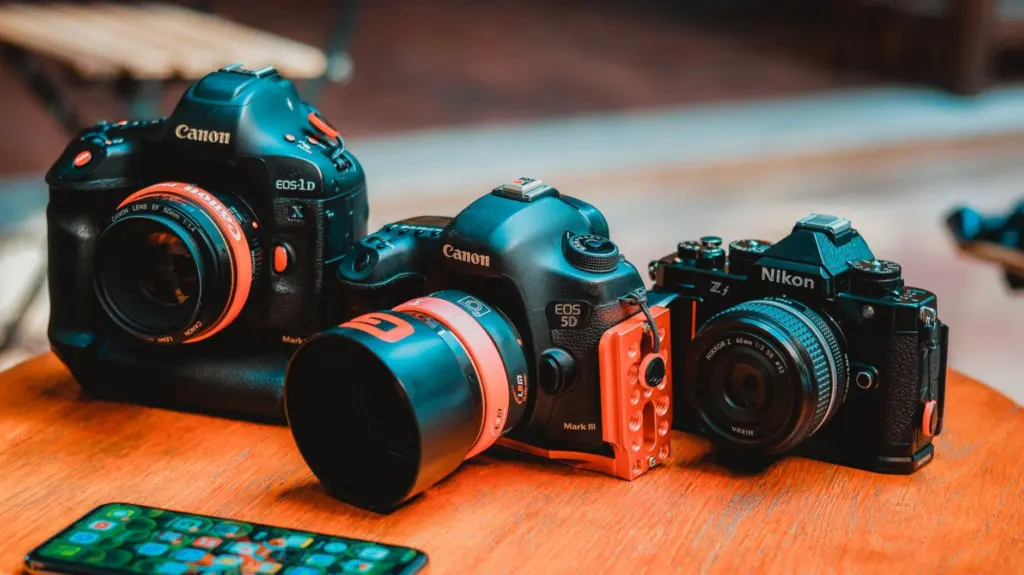
Buy a mirrorless camera if you want a compact body and an electronic viewfinder. Buy a DSLR if you prefer an optical viewfinder and traditional manual control. Neither is wrong for a beginner, and the choice mostly comes down to how you like to frame a shot.
What changes in your hands
According to Cameravs, DSLR bodies keep the optical viewfinder and manual control, while mirrorless bodies pair an electronic viewfinder with a more compact build. An optical viewfinder shows you the scene through the lens directly. An electronic viewfinder shows you an image generated from the sensor, which is why it suits photographers who like to see their settings reflected in the frame before they shoot.
That difference is small on paper and large in the shop. Hold both types for a few minutes, raise each to your eye, and notice which one you would rather look through for a whole afternoon. A viewfinder you dislike will cost you more shots than any specification will win back.
What the example listings show
Three bodies from one camera listing illustrate the spread. The Canon EOS 5D Mark III is a full-frame DSLR with a 22.3 MP sensor and a 61-point autofocus system, with 41 cross-type points listed. The Nikon D3100 is an entry DSLR with a 14.2 MP DX sensor and a basic 11-point autofocus system. The Sony Alpha a6000 is an APS-C mirrorless camera with 24.3 MP, 11 fps burst shooting and 179-point phase-detect autofocus, described as giving sharp stills in a body smaller than a DSLR lens.
These are listing descriptions rather than lab measurements, so use them to see the categories, not to rank the cameras on image quality. The pattern is useful anyway: the mirrorless example offers a very dense autofocus array in a small body, while the DSLRs show the range from basic entry to full-frame, with an optical viewfinder at both ends.
Who each type suits
- Choose mirrorless if you travel, carry a camera daily or want a body that is compact enough that you actually bring it. It also suits anyone who wants to see their exposure choices in the viewfinder.
- Choose a DSLR if you prefer looking through the lens directly, value physical manual controls and are happy with a larger body. An entry DSLR is a low-commitment way to learn the fundamentals.
- Wait and handle both if you cannot decide from a description. This choice is about feel, and a few minutes in a shop is better evidence than a spec sheet.
For the longer comparison, including the practical consequences of owning each type, read DSLR vs Mirrorless: Which Camera Is Right For You in 2026 (Practical Guide).
Sensor size: APS-C versus full-frame
Sensor size sets the field of view a lens gives you and shapes the price of the kit. APS-C is the practical starting point for most beginners, and full-frame is a deliberate step up rather than a necessity.
How the two formats compare
A full-frame sensor matches the size of a 35mm film frame, so lenses are used at their stated focal length with no conversion, as this SmartReview camera comparison explains in its glossary. APS-C sensors are smaller, so the same lens frames a tighter view. SmartReview puts the crop factor at about 1.6x, and some listed APS-C models show 1.5x.
- Full-frame: matches 35mm film size, so the printed focal length is the real framing. The Canon EOS 5D Mark III in the listing above is the full-frame example, with a 22.3 MP sensor.
- APS-C: crop factor about 1.6x, with some models at 1.5x. The Sony a6000 is the APS-C example at 24.3 MP.
- Nikon DX: the Nikon D3100 is listed with a 14.2 MP DX sensor. Check Nikon’s own specification to confirm its crop factor before doing any framing maths.
In practice the crop factor works as a multiplier on what you see. A lens on an APS-C body frames the scene as if it were a longer lens on full-frame, which helps with distant subjects and can be a nuisance for wide landscapes or interiors. Keep that in mind when choosing a first lens.
Is full-frame worth it?
Full-frame is worth it when you already know that you will use what it offers and can afford the larger kit. One listing describes the Canon 5D Mark III’s full-frame sensor as delivering stunning dynamic range and low-light performance, and that is the kind of benefit that justifies the step for someone who regularly shoots in dim conditions. For a beginner still learning exposure and composition, though, the extra cost buys capability that may sit unused for a long time.
A reasonable rule is to start on APS-C unless you have a specific need that it cannot meet, and to move up once you can name that need. The full comparison is in Crop Sensor vs Full Frame: Which Camera Sensor Is Right For You in 2026?. If you decide to go the full-frame mirrorless route, the best full frame mirrorless camera guide covers the options.
Reading a spec sheet without being misled
A spec sheet is a filter, not a verdict. Use it to rule bodies out, then decide between the survivors by handling them.
The listing figures show which numbers appear and what they are best used for:
- Resolution: the three example bodies span 14.2 MP to 24.3 MP. Treat resolution as a question about print size and cropping room, not as a quality ranking by itself.
- Autofocus points: 11 points on the entry DSLR, 61 on the full-frame DSLR and 179 on the mirrorless body. A higher count suggests broader frame coverage, but how well a system tracks a moving subject depends on more than its point count, so confirm by trying it.
- Burst speed: the a6000 is listed at 11 fps. That matters for children, pets and sport, and is largely irrelevant for landscapes.
- ISO behaviour: the Nikon D3100 listing describes clean images at ISO 100–3200. Treat that as a description of its comfortable range, not as a guarantee for every scene.
- Stabilisation: the a6000 is listed without in-body stabilisation, so check whether your chosen body or lens provides it if you shoot handheld in dim light.
The point is to match each number to a situation you will actually shoot in. A beginner photographing landscapes can ignore burst rate completely and spend the attention on the lens and a steady support instead.
Choose your first lens
The first lens should match your subject, not your body. A prime lens, with a single fixed focal length, suits portraits and low-light work, while a zoom suits changing situations where you cannot move your feet.
Prime or zoom
A prime asks you to move to frame your shot, and many learners find that this teaches composition quickly. A zoom lets you change framing from where you stand, which is easier at events, on trips and with children. If you cannot predict your subjects yet, a zoom is the safer first purchase, and a prime is a good second. The full decision process is in Prime Vs Zoom Lenses: How To Choose The Right Lens For Your Photography In 2026.
For portraits
The Canon EF 85mm f/1.8 USM is the prime example in the listing: it has an f/1.8 aperture, no image stabilisation and a weight of 15 oz, described as light enough to avoid fatigue on long sessions. The wide aperture is the portrait-friendly feature, and the lack of stabilisation means you should rely on a fast shutter speed or a steady stance. Remember the crop factor from the sensor section when you pair a lens like this with an APS-C body, since the framing will be tighter than on full-frame. For options at different prices, see the best portrait lens guide.
For landscapes
The Canon EF 17-40mm f/4L from the same listing is a wide zoom with a constant f/4 aperture, which gives consistent exposure across the zoom range, and it is weather sealed. A constant aperture means you do not need to adjust exposure as you zoom, and weather sealing is useful if you shoot outdoors in poor conditions. On an APS-C body the crop factor narrows its wide end, so landscape shooters on smaller sensors should favour lenses that start wider. The best lens for landscape photography guide goes through the choices.
For distant subjects
Wildlife, sport and anything you cannot approach calls for a telephoto lens, usually a second lens rather than a first. The Telephoto Lenses Explained: How They Work, When To Use Them, And How To Get Sharp Results In 2026 guide explains how they work and why technique matters for sharp results.
Example bodies side by side
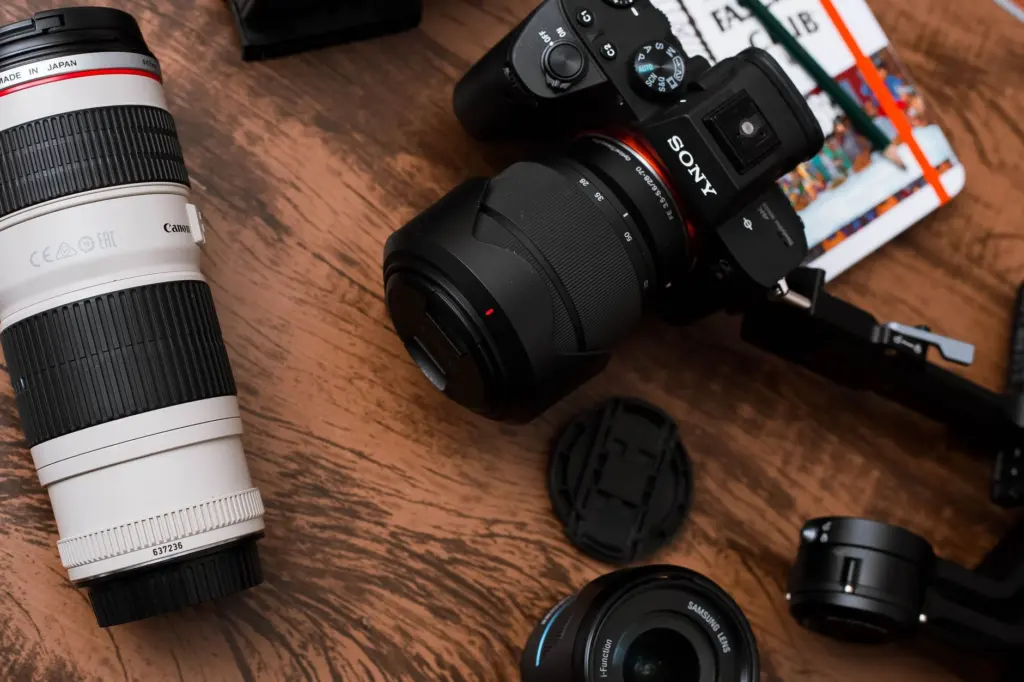
The table places the three listed bodies on common criteria, so you can see which type of buyer each one represents. It describes the listing, not a purchase recommendation for any specific model.
| Model | Type | Sensor and resolution | Autofocus | Planning use |
|---|---|---|---|---|
| Canon EOS 5D Mark III | DSLR | Full-frame, 22.3 MP | 61-point, 41 cross-type points listed | Suits a learner who wants a full-frame DSLR with an optical viewfinder and plans to shoot in low light |
| Nikon D3100 | Entry DSLR | DX, 14.2 MP; ISO 100–3200 described as clean | Basic 11-point | Suits a low-commitment start where simple controls matter more than tracking performance |
| Sony Alpha a6000 | Mirrorless | APS-C, 24.3 MP; 11 fps burst | 179-point phase-detect | Suits someone who wants a body smaller than a DSLR lens, fast bursts and dense autofocus coverage |
Figures are taken from the camera listing for each model.
Read the table by asking which row describes your priorities. If compactness and burst rate matter, the mirrorless row is closest. If optical viewfinder and full-frame matter, the first row is. If you just want a straightforward way to learn exposure, the entry DSLR row shows what a basic system looks like. Before buying, check the current price, lens availability and condition of any specific unit, since the listing does not settle those.
Accessories and care
Accessories are where a beginner’s budget quietly leaks, so add them in response to a problem you have actually met, not in advance.
- A tripod: it becomes useful when you want slow shutter speeds or careful landscape framing, and it compensates for lenses without stabilisation. What Is a Tripod? The Practical Guide to Choosing and Using One in 2026 explains what to look for, and the best travel tripod guide suits anyone who walks with their kit.
- A bag: choose it after you know your kit. A body and one or two lenses need less padding than a full outfit, and the best camera bag guide compares options by use.
- Lens care: dirt on the front element affects every frame, so learn safe cleaning early with How To Clean Your Camera Lens: A Practical 2026 Guide For Clear, Scratch‑Free Photos.
- Editing and display: once you are producing photographs you want to judge accurately, the best monitor for photo editing guide helps you see your images properly. When you have prints or favourites worth showing at home, Big Moments, Bigger Display: The Ultimate Guide To Choosing A Large Digital Photo Frame In 2026 covers display options.
Frequently asked questions
Can a film or instant camera be a first camera?
Yes, if you value a slower, more deliberate way of working over flexibility. The guides to the best film camera for beginners and to instax vs polaroid compare those routes, but an interchangeable-lens digital body remains the better teacher for learning exposure and lenses.
Does a beginner camera need in-body stabilisation?
Not necessarily. The Sony a6000 is listed with no in-body stabilisation, and the Canon 85mm f/1.8 has no image stabilisation either, according to the camera listing. If you plan to shoot handheld in dim light, look for stabilisation in the body or lens, or use a tripod.
How much battery life should I expect from a small mirrorless body?
The a6000 listing gives about 360 shots per charge and describes battery life as short, as stated in the camera listing. If you plan long days of shooting or travel, check the rated figure for any body you are considering and plan to carry a spare battery.