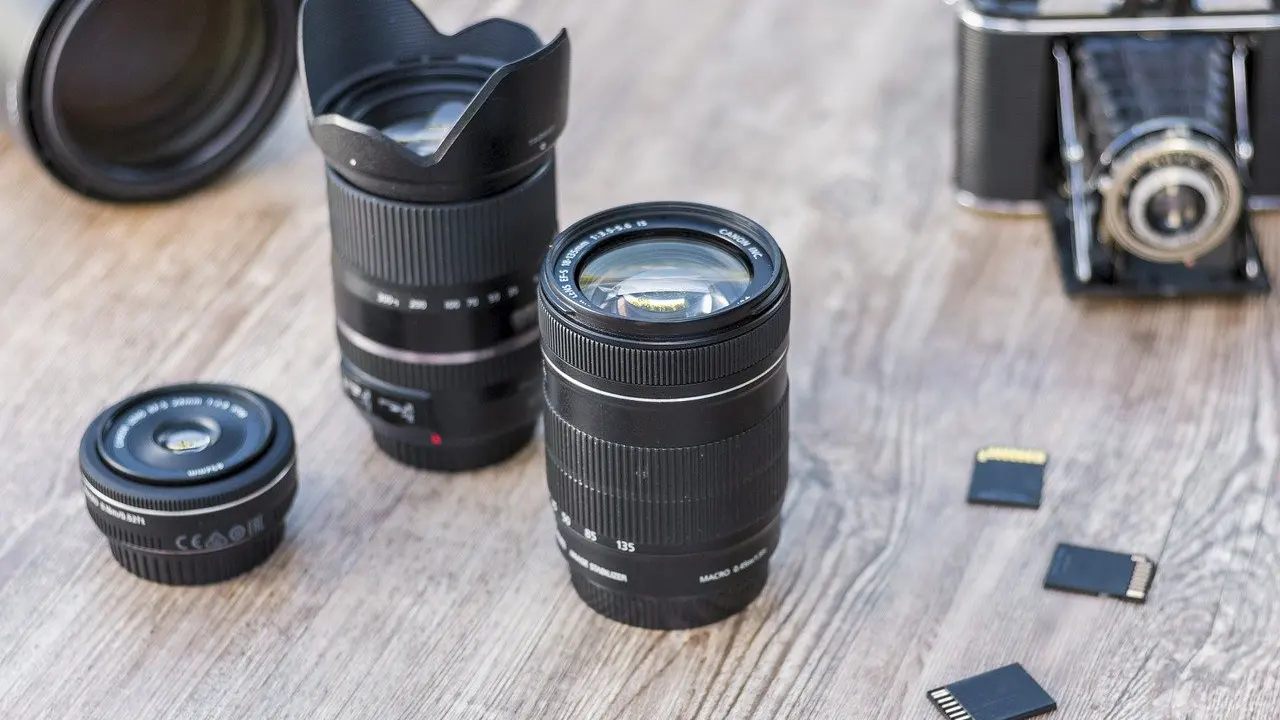
With a compact prime in your left hand and a zoom in your right, the prime vs zoom lens decision comes down to variety: choose the zoom when subjects change, a prime for portraits, dim light or tight budgets.
Lens choice follows the body, so start with our guide to the best camera for beginners, then use this page to decide what goes on the front. The sections below take the usual assumptions about primes and zooms one at a time and say how far each one holds.
What separates prime and zoom lenses
A prime lens has a fixed focal length, while a zoom lens offers a range of focal lengths in a single lens, according to a lens-buying guide. Everything else follows from that design. Noam Kroll’s primes-versus-zooms comparison points out that primes need less glass and are typically much smaller, and that there is no question a zoom is the more versatile tool. The table turns those trade-offs into buying decisions.
| Feature | Prime lens | Zoom lens | Planning use |
|---|---|---|---|
| Focal length | Fixed | A range in one lens | Choose a zoom if you cannot predict how close or far your subjects will be. |
| Maximum aperture | Affordable primes can reach f/1.4 or lower | May have smaller maximum apertures; a good zoom rarely opens wider than f/2.8 | Favour a prime for dim light and strong background blur. |
| Size and weight | Less glass, typically much smaller | Heavier and bulkier | Favour a prime if you carry the kit all day. |
| Price | Often better value when budget is a concern | With the same brand and optics, zooms cost more | Favour a prime if cost per lens matters most. |
| Image quality | Usually better optical quality | Sometimes not the same image quality | A tendency only; see the sharpness section before letting it decide. |
These contrasts come from that buying guide and Noam Kroll’s comparison, and they describe general tendencies rather than every individual model.
The first misunderstanding to drop is that one type simply wins. Each row favours a prime or a zoom depending on what you shoot, so the useful question is which row matters most to you.
Sharpness and image quality
The belief that primes are always sharper is partly right and often overstated. Kroll notes that it is much easier for manufacturers to make prime lenses really sharp, because a prime serves a single focal length. The buying guide adds that zooms may sometimes not offer the same image quality as primes.
Photographer Martin Bailey ran an informal test on a Canon EOS R5 mirrorless body at 50mm, comparing an RF 50mm prime, a 24-105mm zoom and an older 50mm f/1.4. He found the sharpness, especially on the camera, very similar with all three lenses, with the RF 50mm prime probably fractionally sharper. The clearer difference showed up in a steel-rule edge at f/8: a little colour fringing on either side of the rule with the zoom and the older 50mm, but none with the RF 50mm prime.
That is one photographer’s single test, not a lab measurement, but it matches the practical picture. A prime tends to have the edge in optical cleanliness, and a modern zoom can come close in everyday sharpness. If you are choosing between the two types mainly for sharpness, the choice is weaker than it looks. Aperture and size are firmer reasons, and aperture is next.
Aperture, low light and bokeh
Aperture is where primes show their clearest advantage. Kroll says affordable primes, such as Rokinon Cine Lenses, offer very wide apertures, while it is rare to find a good zoom that opens as wide. A Phoblographer debate makes the same practical point: primes let you shoot in lower light without cranking up your ISO. Kroll concludes that if you often work in low light, primes are probably the better fit.
Aperture also controls bokeh, the look of the out-of-focus background. Bailey keeps an RF 50mm f/1.2 prime for the wider aperture and the shallower depth of field it brings, and he describes the creamy bokeh as an added bonus. The buying guide likewise says the large apertures of primes give a pleasing bokeh effect.
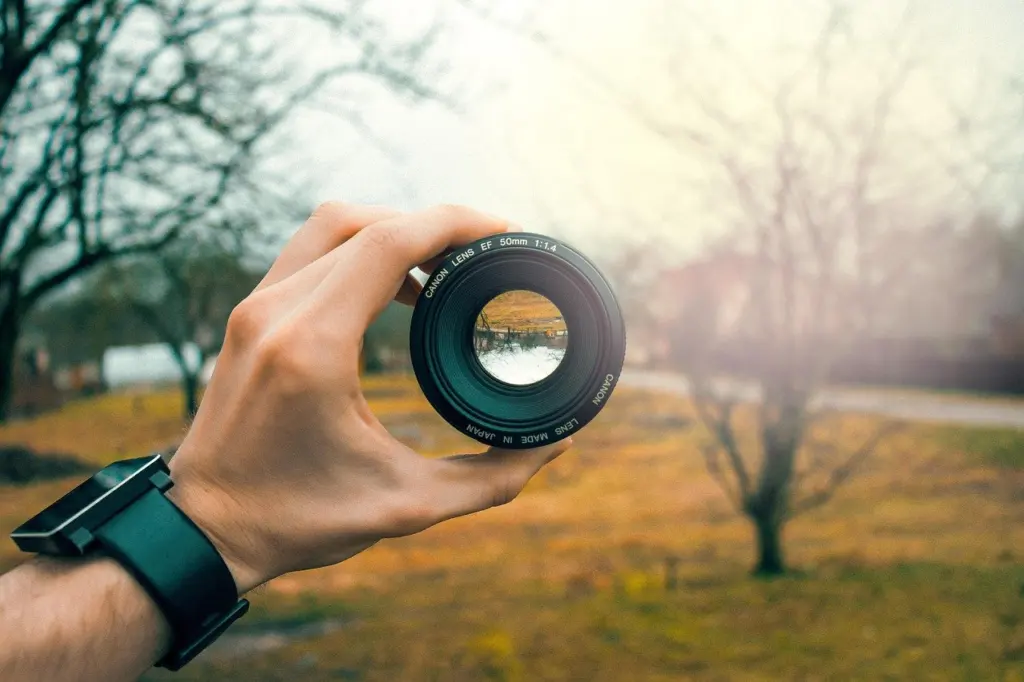
The practical rule is to read the maximum aperture on the specific lens rather than assume from its type. If a blurred background or dim-room shooting is your main goal, a wide-aperture prime serves it more directly than a typical zoom.
Weight, size and price
The assumption that primes are always lighter and cheaper needs two qualifiers, and both come from the evidence. Primes require less glass and are typically much smaller than zooms, but a prime is not automatically cheap or light once you start buying several.
- Single lens versus kit. Photographers on The Phoblographer note that multiple prime lenses can be lighter than one giant zoom, so the comparison depends on how many focal lengths you actually need.
- Price within a brand. Kroll states that when comparing the same brand name and optics, zooms are always more expensive. That makes a single prime the cheaper way to get good glass.
- Value when money is tight. The buying guide says prime lenses often provide better value for money when budget is a concern, while zooms can be heavier and bulkier.
Published weights and prices differ by model and mount, so compare the exact lenses you are considering. A zoom costs more and weighs more, but it saves the lens changes and the extra bodies of glass in your bag when your subjects keep changing distance.
Matching the lens to what you shoot
Travel and landscape
For travel and landscape work, framing flexibility usually outweighs a fast aperture. Bailey says he will pretty much always choose the zoom lens for travel and landscape photography, a personal preference that fits a day when you cannot control how far you can stand from the view.
Events and documentary-style shooting
Kroll calls zooms ideal for those who shoot events, documentaries and other run-and-gun content. When the moment will not repeat and you cannot step back or change lenses, one lens that covers the framing you need is worth more than a wider aperture.
Narrative and planned work
When you control the scene and the distance, a prime becomes easier to justify. Kroll leans towards primes for narrative work and towards zooms for documentaries, a split that comes down to how much you can plan your framing in advance.
Beginners and tight budgets
A beginner who does not yet know which genre will stick is better served by a zoom. Kroll’s view is that a zoom is more versatile than a prime, and the buying guide suggests that a wide-range zoom, such as an 18-200mm, is a sensible start when you want one lens for most situations. You learn which focal lengths you actually use without paying for several lenses.
A prime suits the beginner whose interest is already clear, such as portraits or dim-room shooting, and whose budget is limited, because primes often give better value for money. Settle the body first if you have not: DSLR vs Mirrorless: Which Camera Is Right For You in 2026 (Practical Guide) covers that choice before you spend on glass, and our best camera under 500 guide shows what a small budget covers on the body side.
Frequently asked questions
| Question | Answer |
|---|---|
| Is a zoom lens worth the extra weight and price? | It depends on how varied your framing is. If you stay at a fixed distance from your subject, a prime is smaller and often better value; if distances keep changing, the zoom’s range justifies the extra bulk and cost. |
| Which lens is better for portraits? | A prime. Photographers often use prime lenses for portraits, mainly because their wide apertures separate the subject from the background. |
| How much range can zooms cover compared with primes? | A lot. Bailey’s kit uses three RF lenses to cover every millimeter from 15 to 500mm, whereas replacing his first two zooms would take six primes (14, 24, 35, 50, 85, 100mm). |