| Effect | What the evidence supports | Planning use |
|---|---|---|
| Narrow angle of view | A telephoto lens has a narrow angle of view and enlarges distant subjects. Lenses around 80mm or greater are called telephoto. | Choose one when you cannot or should not step closer. Expect to frame tighter than your eye suggests. |
| Compression | Distant objects appear closer together, and background objects look closer to the subject. | Use it to stack layers in a scene, such as buildings, hills or crowds. |
| Shallow depth of field | A longer focal length gives a shallower depth of field, so background blur (bokeh) comes more easily. | Prefer a telephoto when you want a subject to stand out from a busy backdrop. |
| Amplified shake | A longer focal length can amplify camera shake. Use a shutter speed at least the inverse of the focal length, such as 1/200s or faster at 200mm. | Set your shutter speed first, then adjust aperture and ISO around it. |
These figures come from Tamron’s telephoto guide and Lenovo’s telephoto glossary.
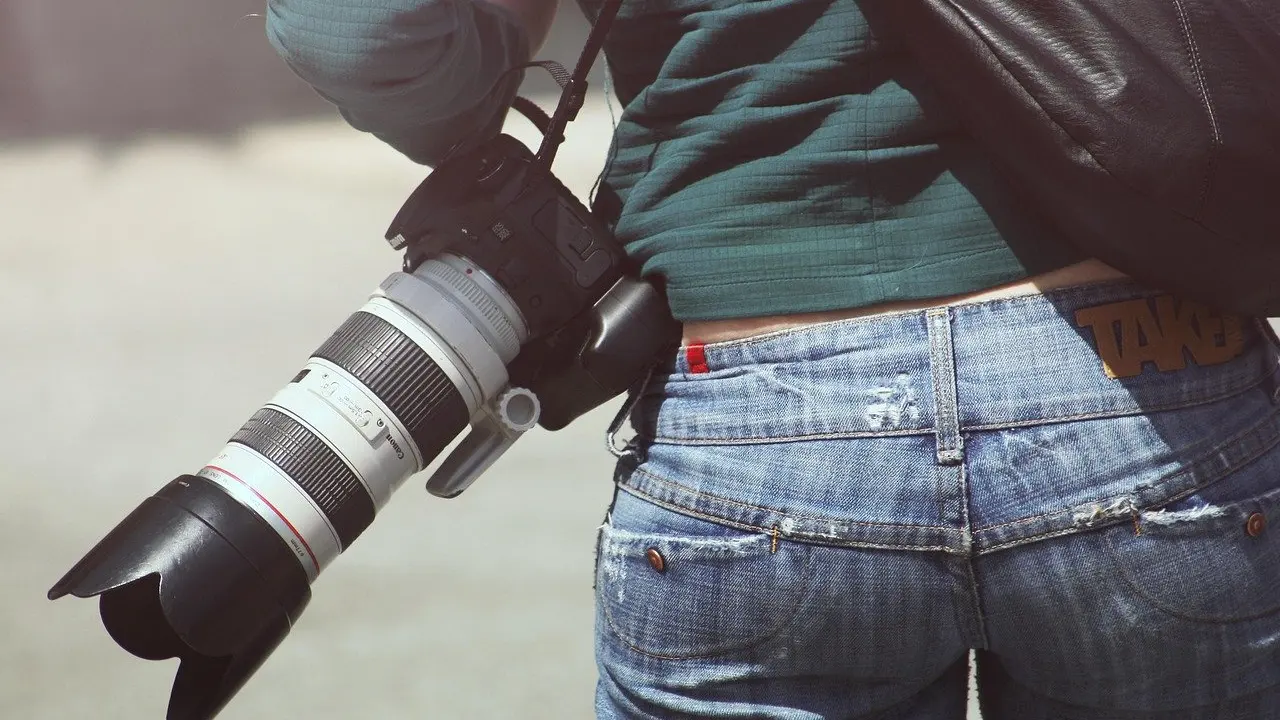
So, what is a telephoto lens? By Tamron’s definition it is a lens of around 80mm or greater with a narrow angle of view that enlarges distant subjects, and its main condition is steady handling.
A long lens is only one part of a kit. If you are still choosing a body to pair with it, start with our guide to the best camera for beginners, then return here to match a lens to your subjects.
Where a telephoto lens changes your pictures
A telephoto lens pays off when distance, background or layering decides the picture. The sections below take the main situations in turn.
Portraits and background separation
Tamron recommends a telephoto lens for portraits because of the soft background and compression it produces. Eufy points to a moderate telephoto of about 85-135mm to isolate the subject, so a portrait does not require the longest lens you can buy.
Aperture and focal length work together here. An independent guide from How to Photograph Your Life notes that the out-of-focus effect of f/2.8 on a background is much greater with a 200mm lens than with a 50mm lens. If you already own a fast aperture on a shorter lens, a longer focal length is the way to get stronger separation without changing the f-number.

Sports, events and concerts
Tamron lists sporting activities, events and live concerts as familiar telephoto situations. Lenovo ties 135-200mm to sports and wildlife, which suits action you cannot approach from the sideline or the crowd.
Distance also helps with candid work. Sessions College describes the greatest strength of a telephoto lens as its ability to remove the photographer from the photo, so people behave naturally while you stay back.
Layered scenes and compression
Compression makes distant objects appear closer together, and it is the reason a telephoto view of a street or skyline looks stacked. Use it when you want depth to read as layers, such as rows of buildings or ridgelines.
The same effect can overstate what is in front of you. The How to Photograph Your Life guide observes that a 300mm lens used on a flock of birds would exaggerate the density of the flock. Check that the packed look suits the story before you rely on it.
Choosing a focal length
Tamron groups telephotos into classes: medium telephoto at roughly 80-100mm, telephoto at roughly 100-300mm, and ultra-telephoto at roughly 300mm or greater. Lenovo gives a similar picture in terms of subjects, with 70-135mm for portraits and events, 135-200mm for sports and wildlife, and 200mm and beyond for super-telephoto work. Treat these as starting points, not strict categories.
- Medium telephoto: suits portraits and events, where you want a tight but natural frame and are working at modest distances.
- Mid-range telephoto: suits sports and wildlife that stay at a moderate distance, and gives room to crop or reframe as action moves.
- Ultra-telephoto: suits subjects you cannot approach, since it offers the most reach of any telephoto class.
Prime or zoom
A prime telephoto has a fixed focal length, and a zoom has a variable one, as Lenovo’s glossary explains. Both come in telephoto lengths, so the choice rests on how predictable your framing is.
- Choose a zoom if your subject distance changes, as with moving players or animals, because you can reframe without moving.
- Choose a prime if you already know the framing you want, such as a portrait at a fixed working distance.
- Compare maximum apertures lens by lens. Sessions College notes that prime lenses typically have smaller maximum apertures, and a zoom’s rated aperture may not be available across its whole range.
How a telephoto lens works
Focal length does the work. A longer focal length narrows the angle of view, which is why distant subjects fill more of the frame. The same focal length also makes the depth of field shallower, a point Tamron links to easier background blur.
The cost is magnified movement. Lenovo warns that the longer focal length can amplify camera shake, so a slight tremor that a wide lens hides becomes visible blur in a long-lens frame.
Getting sharp telephoto results
Shutter speed first
Start with a shutter speed at least the inverse of the focal length, so a 200mm lens needs 1/200s or faster, per Lenovo. On a crop-sensor body, Eufy suggests aiming near 1/(focal length × crop factor), which asks for a faster shutter than the basic rule. If the light is too low for that speed, the How to Photograph Your Life guide recommends raising the ISO or using a tripod.
Stabilization and support
Image stabilization, whether in the lens (OIS/VR) or in the body (IBIS), helps counter small handheld movements, according to Eufy. Eufy also calls a sturdy tripod the most reliable way to tame shake with long lenses. Choosing one is covered in What Is a Tripod? The Practical Guide to Choosing and Using One in 2026.
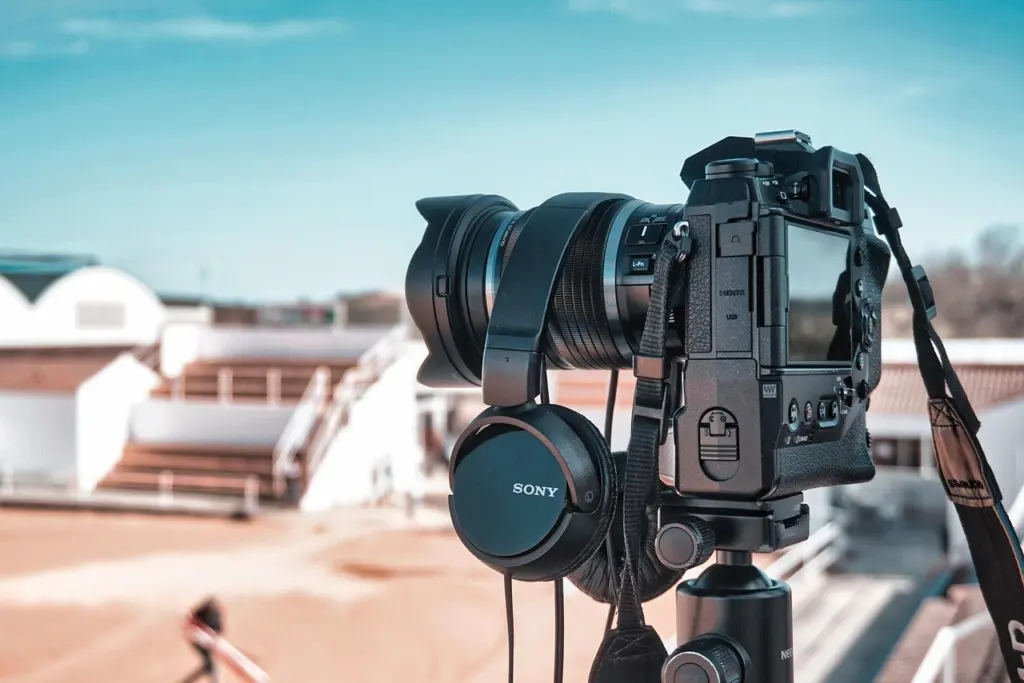
Kit and care
Sharp shooting is also a matter of what you carry. Spare batteries, memory cards and filters all travel better when laid out and checked before a long session.
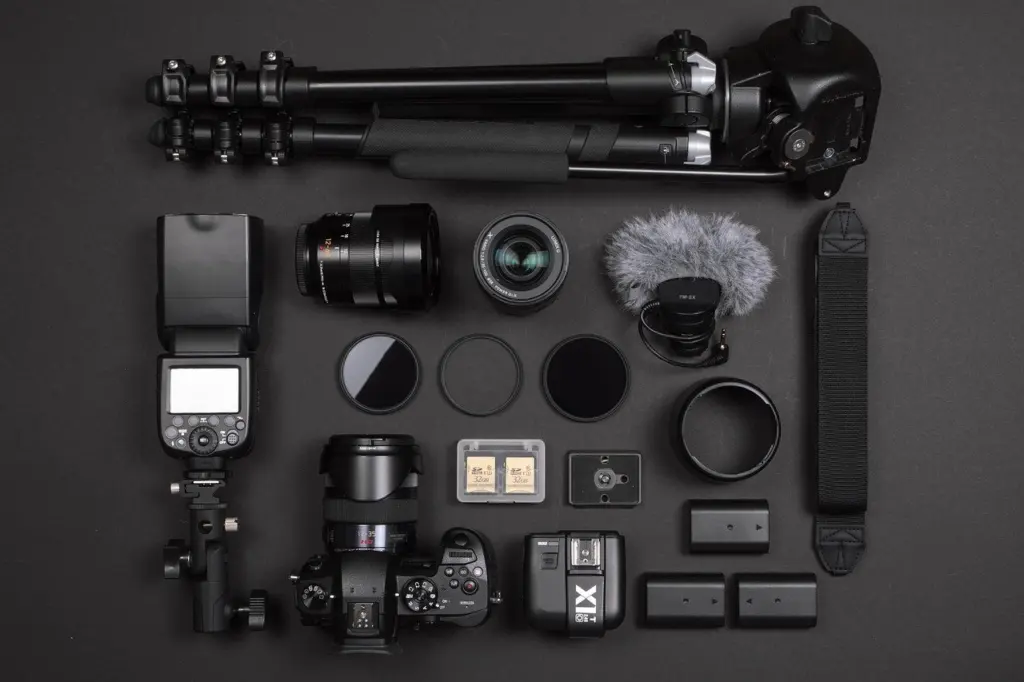
Keep the front glass clean as well. Our guide to How To Clean Your Camera Lens: A Practical 2026 Guide For Clear, Scratch‑Free Photos covers the safe way to do it.
Frequently asked questions
Is a 70mm lens a telephoto lens?
It sits on the boundary. Tamron calls lenses around 80mm or greater telephoto, while Lenovo’s glossary says the range typically starts at 70mm. Lenses between those figures are borderline, so judge by how tight the view looks.
Does a crop-sensor camera change telephoto reach?
Yes. Lenovo gives the example of a 200mm lens on a 1.5x crop sensor, which provides an equivalent field of view of 300mm.
How far from my subject should I stand?
Lenovo says shorter telephotos of 70-135mm work best at about 2-10 meters. Super-telephoto lenses over 200mm are commonly used from several meters to a few hundred meters.
Is a telephoto lens mainly for bringing subjects closer?
Not always. The How to Photograph Your Life guide says putting a background out of focus is a much more common use for a long lens in a professional’s hands.