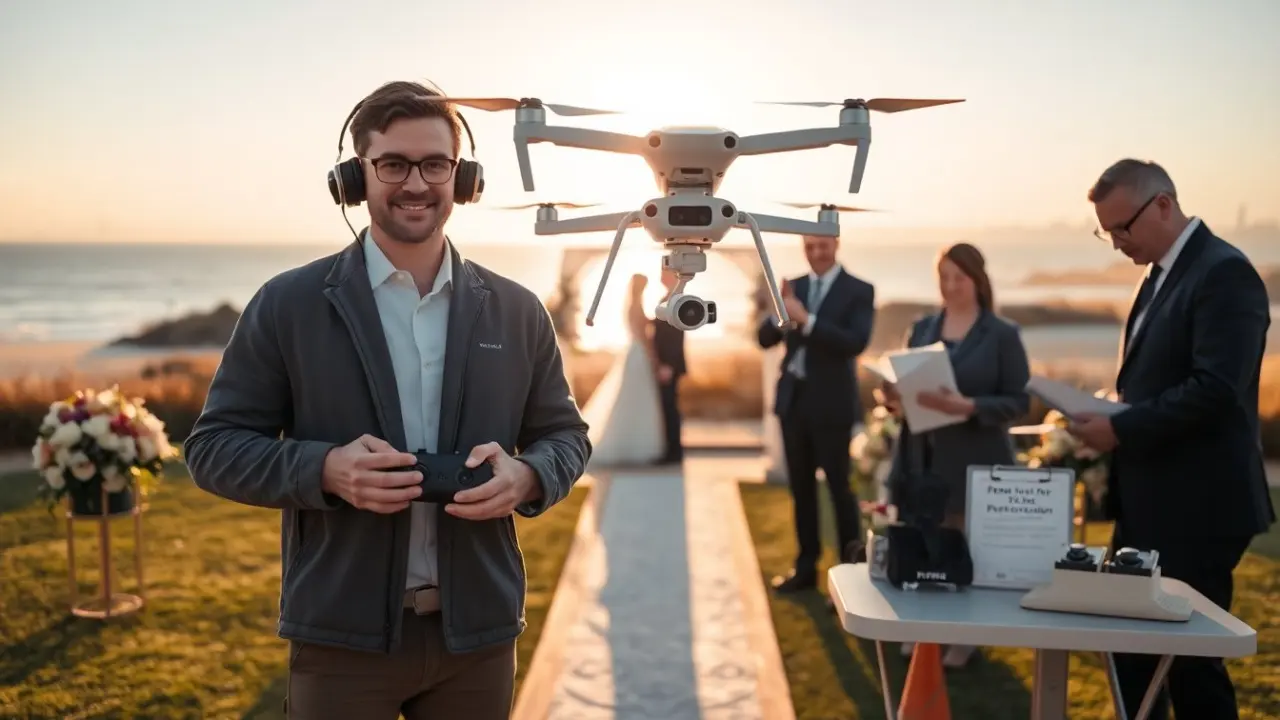
drone wedding photography gives couples a fresh way to capture their day. It offers wide views, dramatic movement, and unique angles. Planners and photographers use drones to show venue scale, guest size, and outdoor details. Couples gain cinematic imagery that complements close-up portraits. This guide explains how drone wedding photography works and what couples must consider before booking.
Key Takeaways
- Drone wedding photography captures unique, cinematic aerial views that enhance traditional wedding photos with dramatic angles and wide perspectives.
- It works best outdoors, especially in venues like beaches, vineyards, and parks, complementing rather than replacing ground photography.
- Couples must plan ahead by checking local drone regulations, securing necessary permits, and creating a detailed shot list to maximize drone photography benefits.
- Safety is crucial; operators should follow strict protocols including insurance, geofencing, and safe takeoff/landing zones to protect guests and equipment.
- Clear communication with the drone operator about deliverables, timelines, and editing preferences ensures expectations are met and results are satisfying.
- Choosing an experienced, certified drone photographer with a strong portfolio and proper equipment enhances the quality and reliability of drone wedding photography.
Why Choose Drone Photography for Your Wedding
Drone wedding photography gives couples new perspectives. It captures the venue, guests, and procession from above. Many couples choose drone wedding photography to show landscape, coastline, or city skyline. The images add scale to portraits. The images add context to ceremony photos. The images add motion when the drone sweeps or circles.
Photographers use drones to create cinematic sequences. They pair aerial clips with close-up footage for wedding films. They include aerial stills in albums to vary the visual story. Planners report that aerial photos increase guest excitement. Couples report that aerial images feel modern and memorable.
Drone wedding photography works best outdoors. The drones perform well above beaches, vineyards, farms, and large parks. The drones also work at small urban rooftops if local rules allow. The drones do not replace traditional photographers. The drones complement ground teams by filling visual gaps. They add a vantage point that ground shots cannot match.
Couples should balance style, budget, and safety. The cost for drone wedding photography varies by operator, flight time, and postproduction. Experienced operators charge more for advanced camera rigs and editing. Couples should request a gallery of prior drone wedding photography to confirm the visual style.
How To Plan Drone Shots: Permits, Timing, and Shot List
Couples must plan drone wedding photography well before the event. They must check local drone rules and venue policies. Many cities require permits for commercial drone flights. Venues may restrict drones near crowds or historic buildings. Couples should ask the photographer to handle permits. Operators often file permits and notify local authorities.
Timing matters for drone wedding photography. Operators prefer early morning or late afternoon. Light at those times creates softer shadows and richer colors. Shot lists should include arrival, ceremony wide shot, exit, and couple portraits from above. The shot list should also include group photos and venue overviews. The photographer should give a backup plan for bad weather and wind.
Safety measures protect guests and gear. Operators should fly at a safe distance over people. They should use geofencing and altitude limits when required. The operator should provide proof of insurance and a safety plan. The plan should include emergency landing zones and a no-fly radius. The venue should reserve a clear takeoff and landing area.
Communication clears expectations for drone wedding photography. Couples should discuss the final deliverables. They should ask for stills, video clips, and suggested edits. They should set delivery timelines and file formats. They should confirm whether the operator will remove noise and stabilize footage. A clear shot list and timeline reduce surprises on the wedding day.
Working With Your Photographer: Safety, Communication, and Delivery Expectations
Couples should vet the drone operator for experience in drone wedding photography. They should ask for references and a portfolio. They should confirm the operator holds relevant certifications. They should confirm the operator carries liability insurance. They should verify the operator uses reliable equipment and follows firmware updates.
Photographers should establish a clear chain of communication. The lead photographer should coordinate with the drone operator. They should assign a point person at the venue to manage guest flow near the drone. They should schedule rotor-on times to avoid startling guests. They should mark a safe landing zone and keep nonessential staff clear of the area.
Photographers should explain how drone wedding photography will appear in the final album. They should show sample edits and color grading. They should explain cropping, resolution, and aspect ratio for cinematic clips. They should explain music licensing for video highlights. They should confirm deliverable formats such as high-resolution stills, 4K video, and web-ready files.
Delivery timelines matter to couples. Operators should state expected delivery windows for drone wedding photography. Many deliver edited stills within two to three weeks. Many deliver full video edits within four to six weeks. Operators should clarify revision limits and extra fees for rush delivery.
Final notes for couples who choose drone wedding photography: they should confirm permit status, insurance, and a shot list. They should meet the drone operator before the wedding. They should review sample work and delivery terms. These steps reduce risk and increase the chance of memorable aerial images.